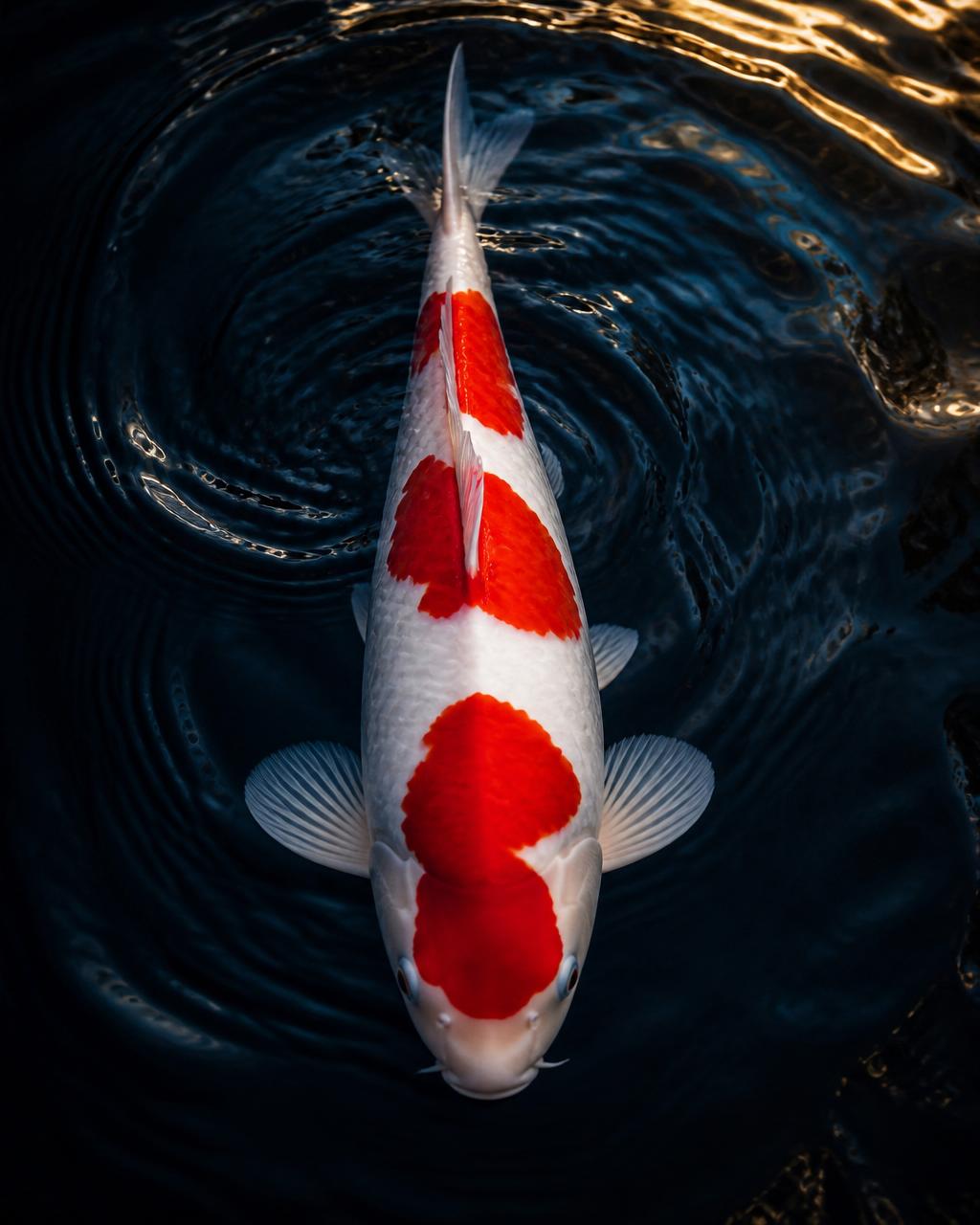
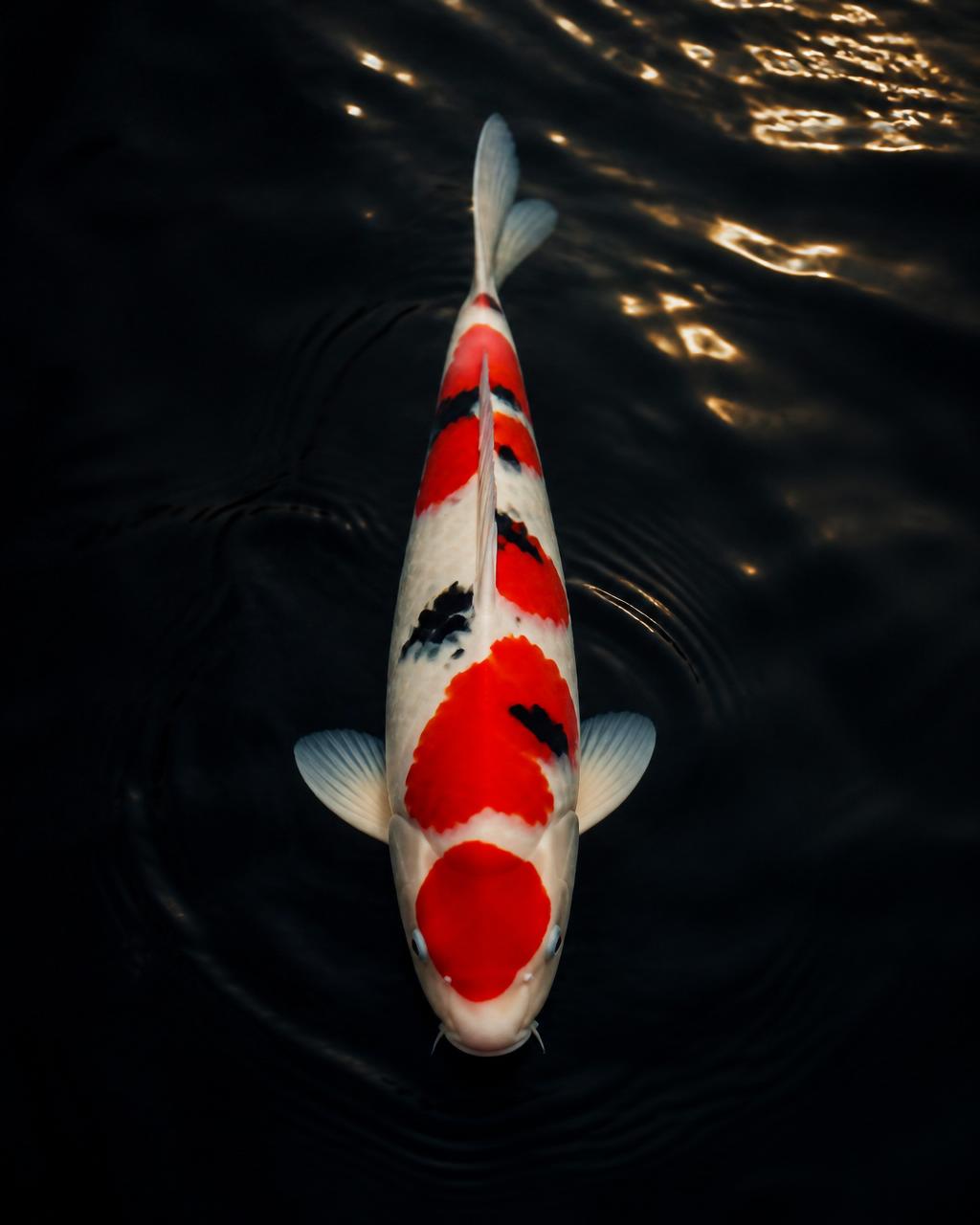
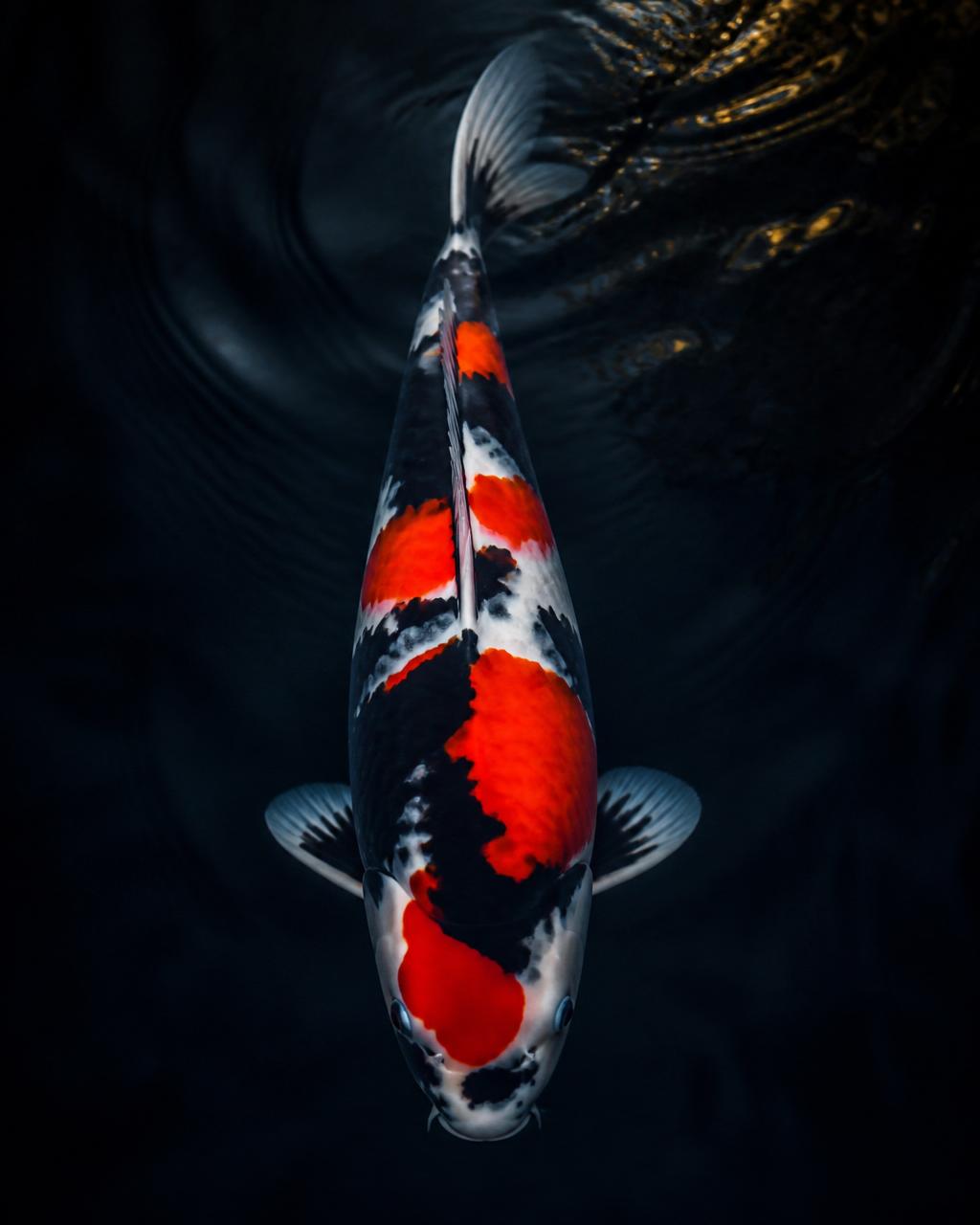
How to Choose a Koi Fish: Body, Skin, and Pattern Explained
Every Japanese koi judge uses the same three-part framework when evaluating a fish: body, skin, and pattern — in that order. Learn to see a koi the way a judge does and you will consistently buy better fish, regardless of variety. This guide walks through each of the three, with what to look for and what to walk away from.
1. Body (conformation) — the foundation
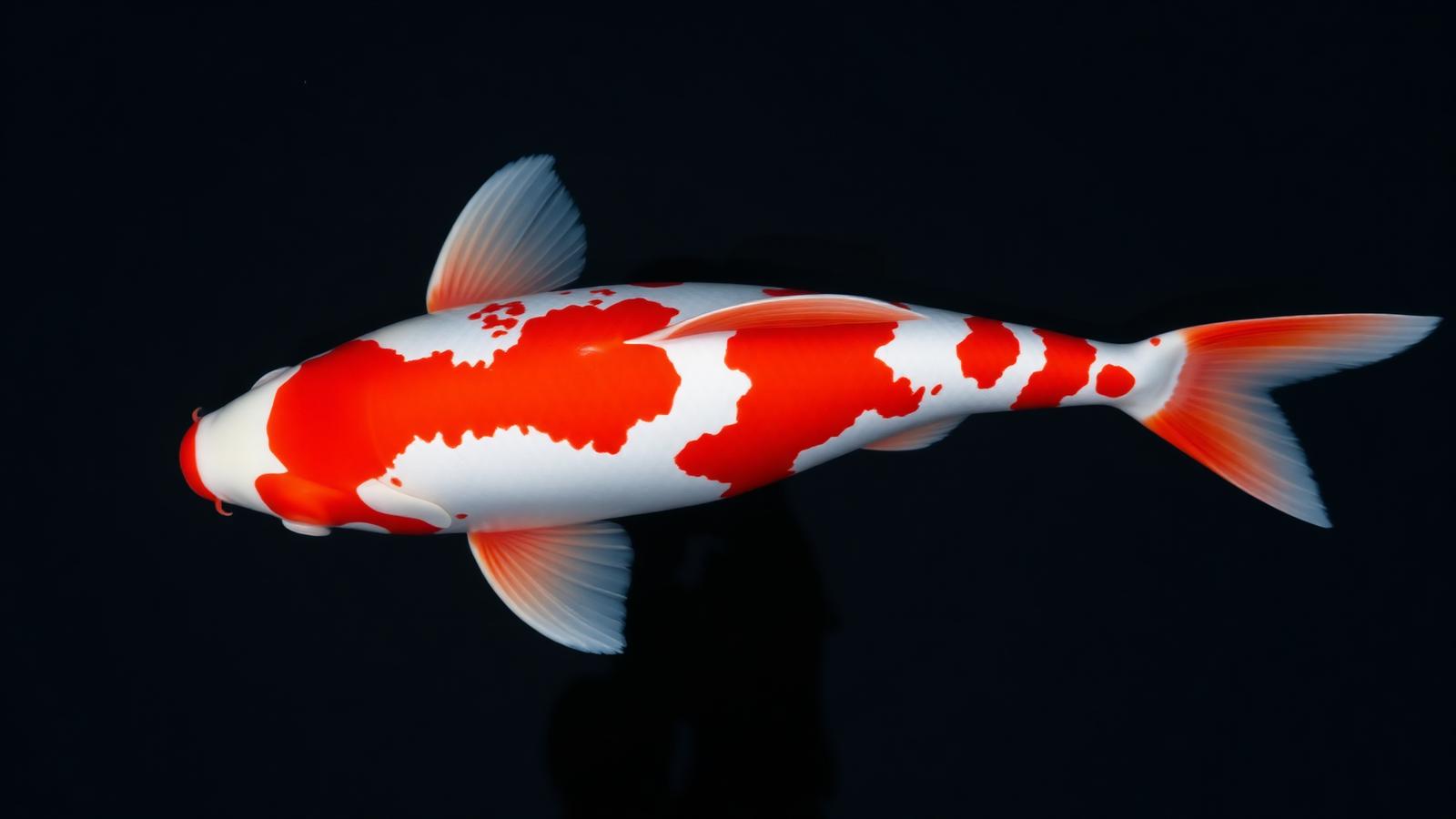
Body is the single most important attribute of a koi and the hardest to fix — a great pattern can appear on a weak body, but the fish will never reach show quality. Look for symmetric shoulders, a straight spine, and a body that widens smoothly from head to shoulder before tapering to the tail (a 'torpedo' silhouette, not a 'football').
Fins should be proportionate and evenly matched left to right. Pectoral fins in particular should look powerful — a koi with weak pecs will never move as well as one with proper conformation. View the koi both from directly above (dorsal view) and from the side. Body flaws hide in one view and appear in the other.
2. Skin — the porcelain test
Skin is what separates Japanese koi from domestic koi. Great Japanese koi have a porcelain, almost 3D quality to the shiroji (white) — as if it's glowing from within rather than sitting flat on the fish.
Look for: shiroji that is snow-bright, not cream or yellow. Hi (red) that is deep, saturated, and uniformly coloured — no fading edges or blotching. Skin that reflects light cleanly without dull patches. Skin defects almost never improve as the fish grows.
3. Pattern — the variety-specific rules
Only after body and skin should you evaluate pattern. Every variety has its own pattern criteria — a great Kohaku pattern is not the same as a great Showa pattern. As a general rule, judges prefer patterns that are balanced across the body, with clean edges (kiwa) between colours and no hi below the lateral line.
For young koi (Tosai and Nisai), stable pattern matters more than 'pretty' pattern. Ask the dealer to show you sibling fish or the same bloodline at older ages — that is the best predictor of how your fish will finish.
Red flags that mean 'walk away'
Any physical asymmetry (crooked spine, mismatched fins, deformed mouth). Cloudy or dull skin. Torn fins or missing scales unless the dealer can explain exactly how it happened. Reluctance to eat, sit high in the water, or drift near the surface. Any hesitation from the dealer about breeder, year, or quarantine history.
Frequently asked questions
- What is the most important thing to look for when buying a koi?
- Body conformation. A koi with a symmetric, powerful body will always outclass a koi with a flashier pattern but weak body as it grows. Judge body first, skin quality second, pattern third — this is the order every Japanese koi judge uses.
- How can you tell if a koi is a good quality fish?
- Great koi have three qualities: a symmetric, torpedo-shaped body with even shoulders and proportionate fins; porcelain skin quality with deep, uniform colours; and a balanced pattern within the rules of its variety. Any one of these three can be a dealbreaker if it's weak.
- Should I buy koi online or in person?
- Both work if the dealer provides clear video of the koi from directly above (dorsal) and from the side, plus a clear arrive-alive guarantee. At Maple Crown Koi we film every koi both ways and welcome video calls before you commit.