A short history of Kohaku
Kohaku is the oldest of the Gosanke — the three varieties (Kohaku, Sanke, Showa) that anchor every koi show in Japan. The variety was stabilised in Niigata in the late 1800s, and modern bloodlines still trace back to breeders like Tomoin, Sensuke, Yagozen, and Manzo. When we import from Niigata each year, most of our Kohaku come from breeders working within these historical lines.
What makes a show-quality Kohaku
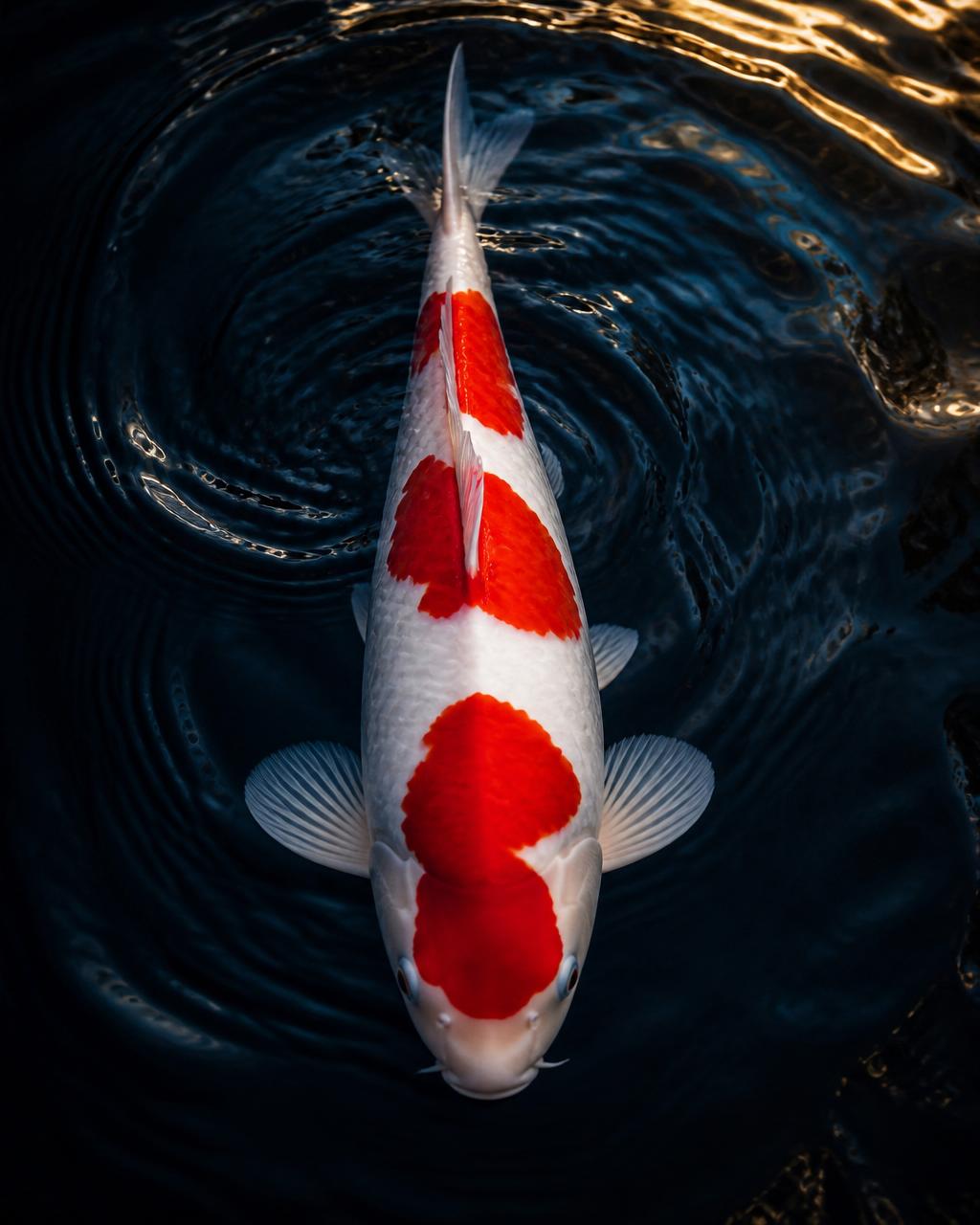
Judges look at three things in this order: the white ground (shiroji), the quality of the red (hi), and the pattern (moyo). Shiroji should read as clean, snow-bright white — not cream. Hi should be deep, even, and cleanly edged (kiwa). A balanced step pattern (nidan, sandan, yondan) across the back is preferred, with hi wrapping down the sides without falling below the lateral line. A break of hi on the head (menware) is a plus; hi covering the mouth or eyes is not.
Choosing your first Kohaku
For a first Kohaku, prioritise skin quality and pattern balance over size. A tosai (first-year) or nisai (second-year) fish with clean shiroji and stable hi will develop far more predictably than a larger fish with cloudy skin. Ask about the bloodline — Sakai, Dainichi, Marudo, and Momotaro all produce Kohaku with different finishing characteristics.