How to Prepare Your Ontario Koi Pond for Winter
Ontario winters are one of the most stressful periods in a koi's year. Done well, a pond that's over 4 feet deep can safely overwinter koi outdoors down to –25°C ambient temperatures. Done poorly, ice locks the pond, gas exchange stops, and koi suffocate under the surface. This guide covers what to do before, during, and after a Canadian winter.
Before the freeze (October–November)
Transition to a wheatgerm-based food once water drops below 15°C, then stop feeding entirely below 10°C. Clean out fallen leaves and organic debris — anything rotting under ice consumes oxygen.
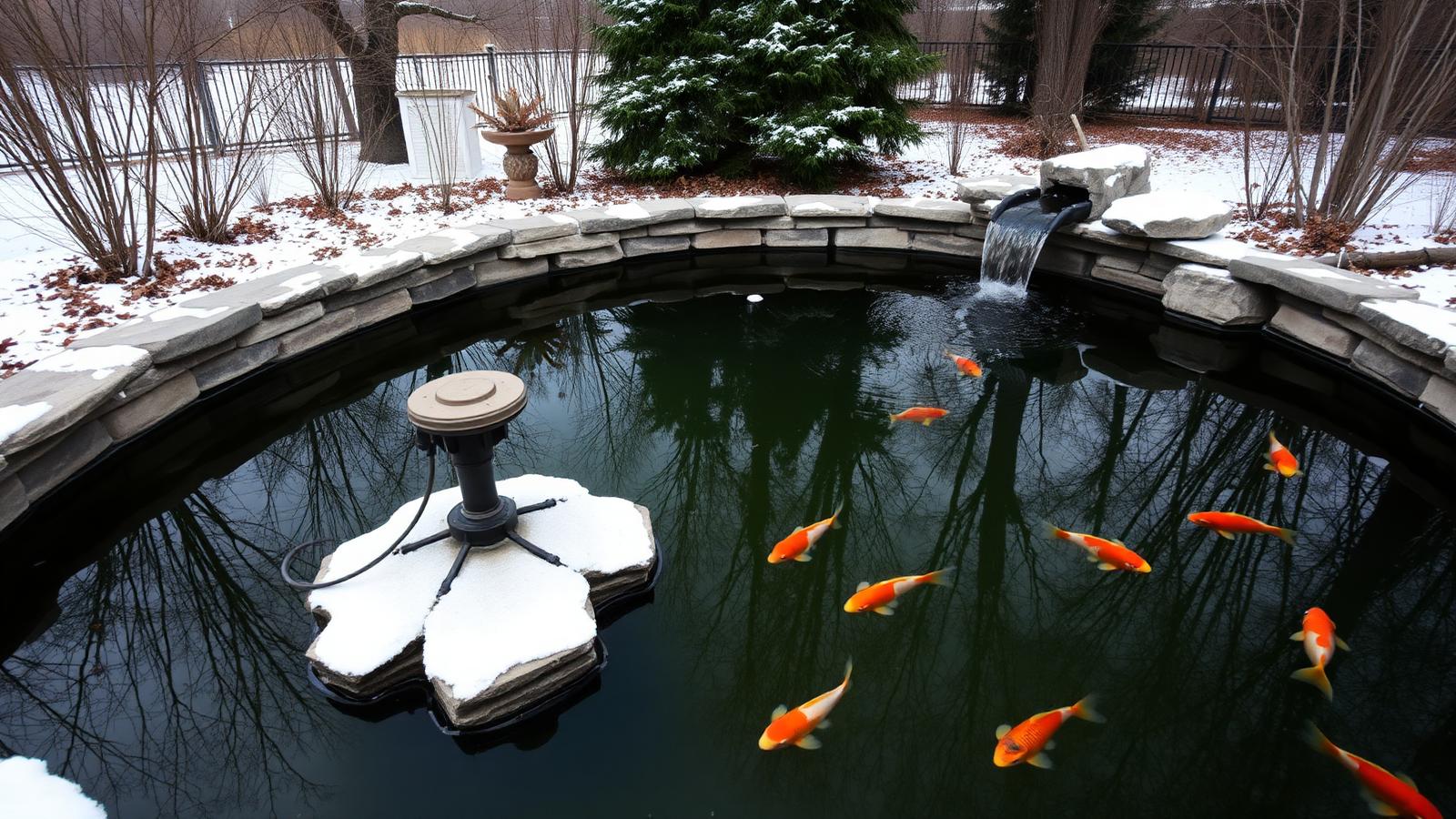
Cut back marginal plants, remove tropical plants entirely, and reposition your air stones toward the middle of the pond, not the deepest zone. You want gas exchange at the surface, not warm-water disruption at the bottom where koi rest.
During winter (December–March)
Keep at least one hole open in the ice at all times. A pond de-icer combined with a running aerator is the most reliable setup for Ontario. Never smash the ice — the shockwave stresses koi.
Do not feed. Do not run the main pump if it circulates cold surface water into the warmer bottom layer; a small dedicated winter pump near the surface is fine. Check parameters monthly and top up evaporation with dechlorinated water.
Spring startup (April)
Restart filtration once water is consistently above 5°C. Test ammonia and nitrite frequently for the first two weeks — beneficial bacteria wake slowly.
Introduce wheatgerm food only once water passes 10°C stably. This is also the highest-risk window for parasite and bacterial issues; watch koi closely for flashing or unusual behaviour.
Frequently asked questions
- Can koi survive Ontario winters outdoors?
- Yes, in a properly built pond of at least 4 feet depth with a de-icer and running aerator maintaining an open hole in the ice for gas exchange. Koi enter a semi-dormant state in cold water and overwinter well when the pond is prepared correctly.
- Do I need to bring koi indoors for winter in Toronto or Markham?
- Not if the pond is 4+ feet deep with proper aeration and a de-icer. Indoor overwintering is only necessary for shallow ponds, small water gardens, or fish recovering from injury or illness.
- Should I run my pond pump in winter?
- Turn off the main pump that pulls cold surface water down into the warmer bottom layer. Keep only a surface-level aerator or a small dedicated winter pump running for gas exchange.