Koi Pond Water Quality: A Complete Guide
Water quality is the single most important variable in koi health. This guide covers the six water parameters every koi keeper should monitor, target ranges for a healthy Canadian koi pond, and how to correct the most common problems before they become fish-losses.
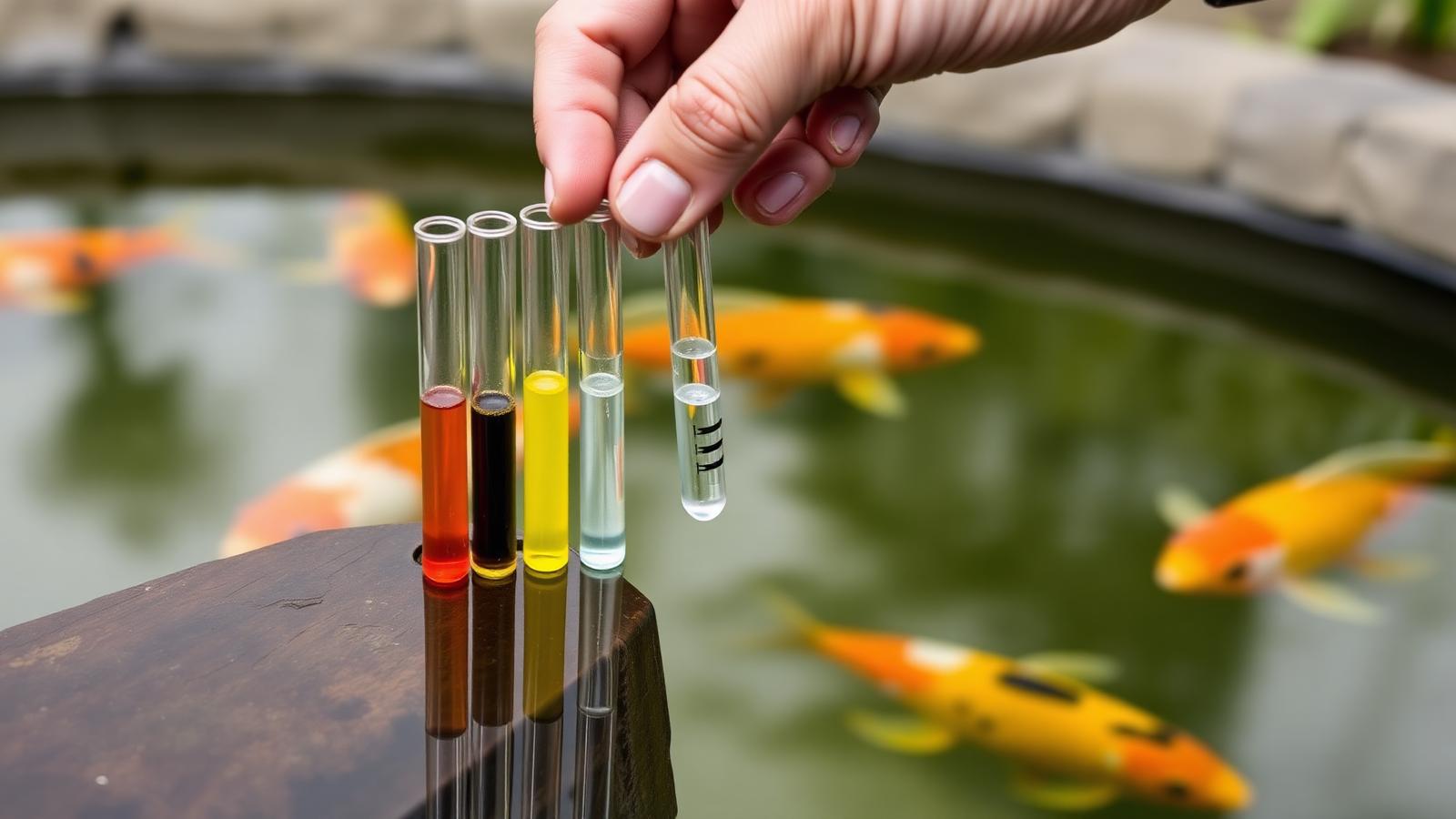
The six parameters that matter
Ammonia (NH3/NH4): target 0 ppm. Any detectable ammonia is stressful; above 0.25 ppm becomes acutely toxic, especially at high pH.
Nitrite (NO2): target 0 ppm. Nitrite binds to koi hemoglobin and starves them of oxygen even in well-aerated water.
Nitrate (NO3): target under 40 ppm. Long-term high nitrate suppresses immunity even though it isn't acutely toxic.
pH: 7.4–8.4 stable. A stable 8.6 pond is healthier than a pond that swings between 7.0 and 8.5 daily.
KH (carbonate hardness): 100–200 ppm. KH buffers pH; low KH is the reason most pH swings happen.
Dissolved oxygen: above 6 mg/L at all times. Warmer water holds less oxygen, so summer aeration matters most.
How to correct the three most common problems
Ammonia spike: a small water change (10–20%) with dechlorinator, add zeolite media temporarily, stop feeding for 48 hours, and check filter media isn't clogged.
Low pH / low KH: add baking soda (sodium bicarbonate) in small doses to raise KH first — pH will follow. Never chase pH directly without buffering.
Green water / algae bloom: run a UV clarifier sized to the pond volume; do not use algaecides in a stocked koi pond.
Frequently asked questions
- How often should I test koi pond water?
- Test the main parameters weekly during the active season (April–October) and monthly through winter, with an extra test after every large water change, new fish addition, heavy rain event, or if a fish shows any sign of stress.
- What causes a sudden ammonia spike?
- The most common causes are overfeeding, adding new koi without gradually building filter capacity, filter media that's been over-cleaned (losing bacteria), and undetected dead fish or debris rotting in the pond.