Feeding Koi in Ontario's Climate: A Seasonal Guide
Koi are cold-blooded, so what you feed them and when depends entirely on water temperature. This Ontario-focused guide covers what to feed koi through each season, portion sizes, and the food ingredients that actually build size, body, and colour.
Match the food to the water temperature
Below 10°C: no feeding. Koi digestion effectively shuts down and unprocessed food will foul the pond.
10–15°C: once a day, a wheatgerm-based transition food, only what they finish in 2–3 minutes.
15–20°C: once or twice daily, standard staple pellet with balanced protein.
20–28°C: 2–3 times daily, high-protein growth food; koi digest fastest in this range.
Above 28°C: reduce back to once or twice daily and prioritize aeration — warm water carries less oxygen.
What actually builds a great koi
Body and size come from protein (32–40%) and fat during summer growth months. Look for whitefish meal or krill meal high on the ingredient list.
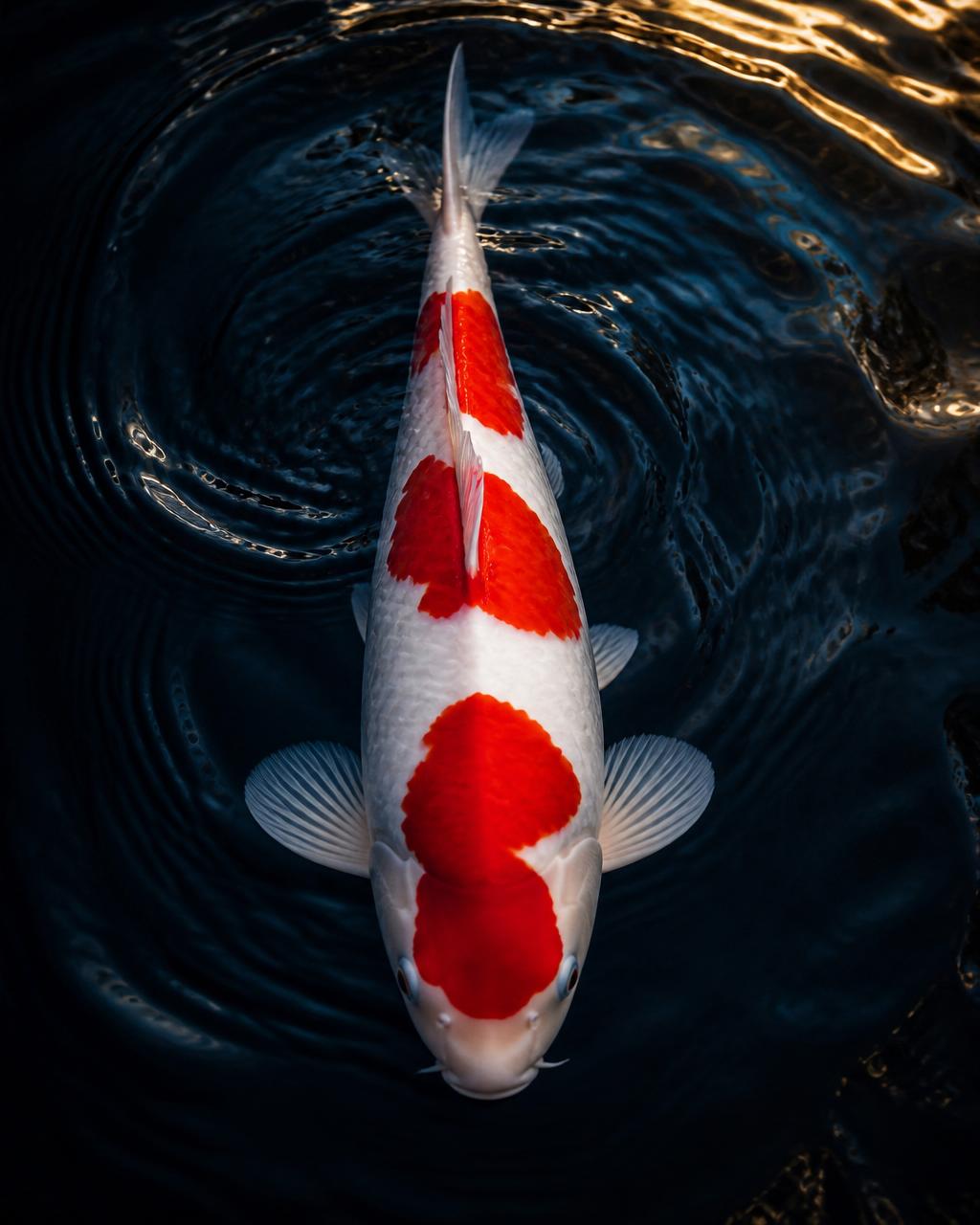
Colour comes primarily from spirulina and natural carotenoid sources. Colour-enhancing foods work beautifully on Kohaku, Sanke, and Ogon; use sparingly on Showa and Utsuri where over-colouring can dull the sumi (black).
Never feed bread, corn, or fish-food designed for goldfish — the wrong protein source and grain content damages koi long-term.
Frequently asked questions
- How much should I feed my koi?
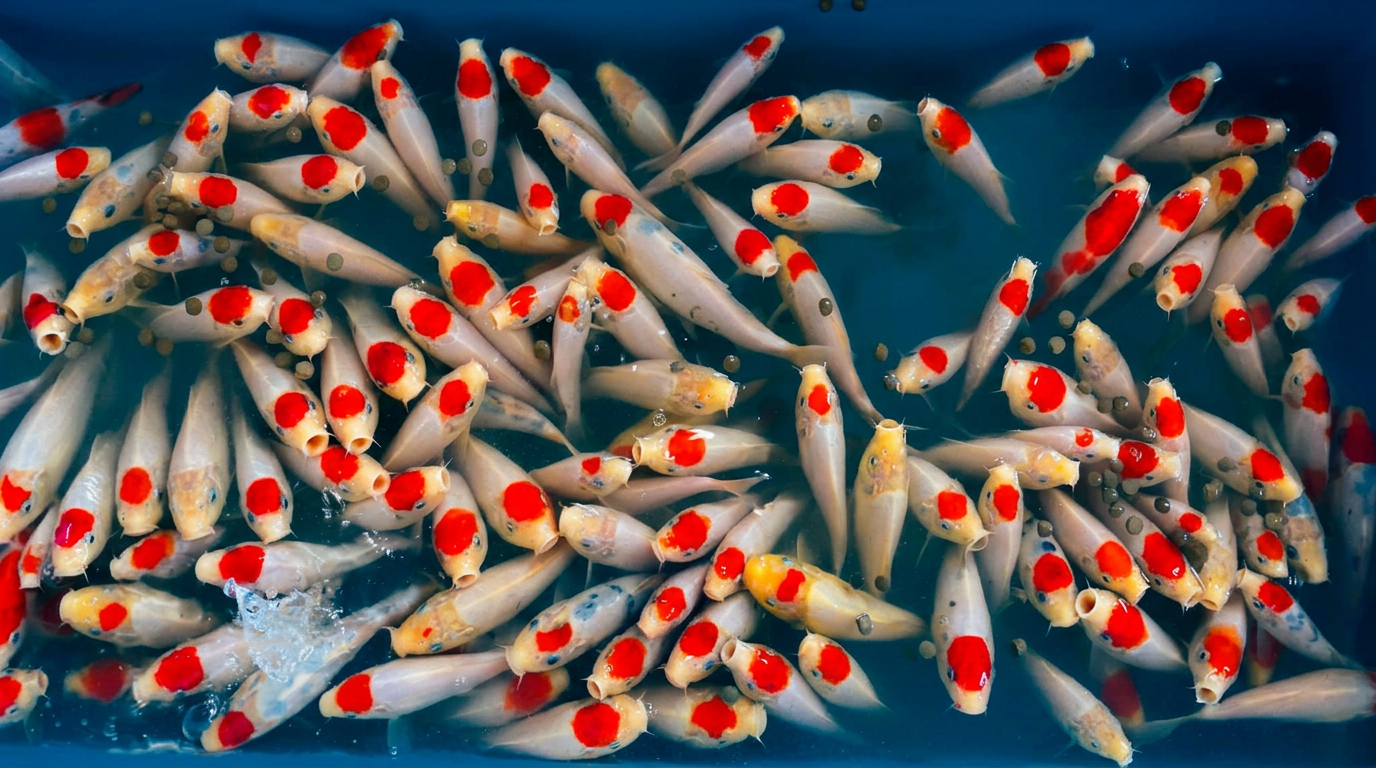
- Feed only what your koi finish within 2–3 minutes, per feeding. In Ontario summer that usually works out to roughly 1–2% of body weight per day split across 2–3 feedings.
- When should I stop feeding koi in Ontario?
- Stop feeding when water temperature drops consistently below 10°C — usually late October to early November in most of Ontario. Resume in spring only after water is consistently above 10°C, usually late April.