Common Koi Fish Diseases: Identification, Treatment & Prevention
Healthy koi are almost always a sign of healthy water. Sick koi are almost always a sign of stress — from water quality, temperature swings, overcrowding, or a new fish introduced without quarantine. This guide covers the most common koi diseases we see in Ontario ponds, how to identify each one, and how to treat and prevent them.
Parasites — ich, flukes, and costia
Ich (white spot disease) presents as tiny white grains scattered across the body and fins. Treat by raising water temperature to 28–30°C over several days and using a proprietary ich treatment; the free-swimming stage is the only one susceptible.
Gill and skin flukes cause flashing (koi rubbing on pond surfaces), rapid gill movement, and clamped fins. Confirm with a mucus scrape under microscope; treat with praziquantel per the product's koi-specific dose.
Costia is a microscopic parasite that produces a grey-blue skin sheen and often follows a stress event. Treat with formalin-malachite or salt raised to 0.3–0.5% over several days.
Bacterial infections — ulcers and fin rot
Ulcers appear as red, raw wounds on the body, often after a parasite infection or physical injury. Small ulcers respond to topical antiseptic and clean water; larger or deep ulcers usually require injectable antibiotics prescribed by a fish-experienced vet.
Fin rot presents as fraying or discoloured fin edges. It is almost always secondary to poor water quality — fix the water first, then treat with a broad-spectrum antibacterial.
Viral diseases — KHV and SVC
Koi Herpes Virus (KHV) is the most serious viral disease of koi worldwide. It typically strikes at water temperatures of 18–28°C and can wipe out an entire pond within days. Symptoms include lethargy, gasping at the surface, sunken eyes, and gill damage.
Every koi arriving at Maple Crown Koi is quarantined and health-checked before it enters our sale pond. Always quarantine new koi for 4–6 weeks before adding them to an established pond — this is the single most important preventative step against KHV and SVC.
Dropsy and general prevention
Dropsy ('pinecone disease') is not a disease itself but a symptom — the fish's scales stand out due to internal fluid buildup. Prognosis is poor; isolate the fish and treat aggressively with clean water, salt, and antibiotics if a vet is available.
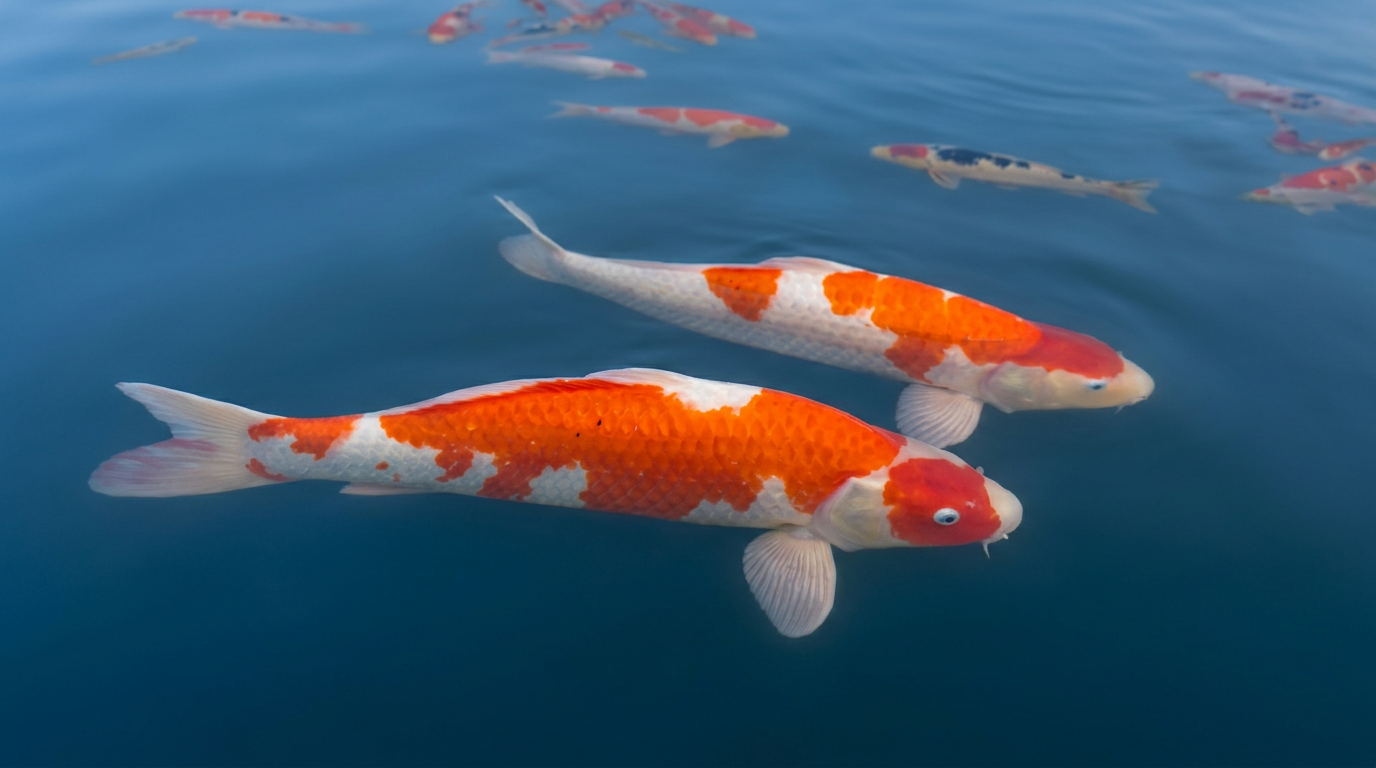
The best prevention is stable water quality, appropriate stocking (250 gallons per adult koi), proper quarantine of every new fish, and a good look at each koi daily during feeding. Most disease is caught early if you know what a healthy koi looks like swimming, resting, and eating.
Frequently asked questions
- What is the most common disease in koi fish?
- Parasitic infections — particularly gill and skin flukes — are the most common health issue in koi. Flukes are present at low levels in most ponds and only cause visible symptoms when the fish is stressed by poor water quality or overcrowding.
- How do I know if my koi is sick?
- Watch for changes in behaviour before appearance. Sick koi usually flash (rub against surfaces), clamp their fins, gasp at the surface, refuse food, or sit isolated from the group. Skin lesions, red streaks in fins, and asymmetric swimming are later-stage signs.
- Do I need to quarantine new koi?
- Yes — always. Quarantine new koi in a separate tank for 4–6 weeks with strong biological filtration and daily observation before adding them to your main pond. This is the single most important step to prevent KHV, SVC, and parasite introductions.