Overwintering Koi in Canada: A Survival Guide
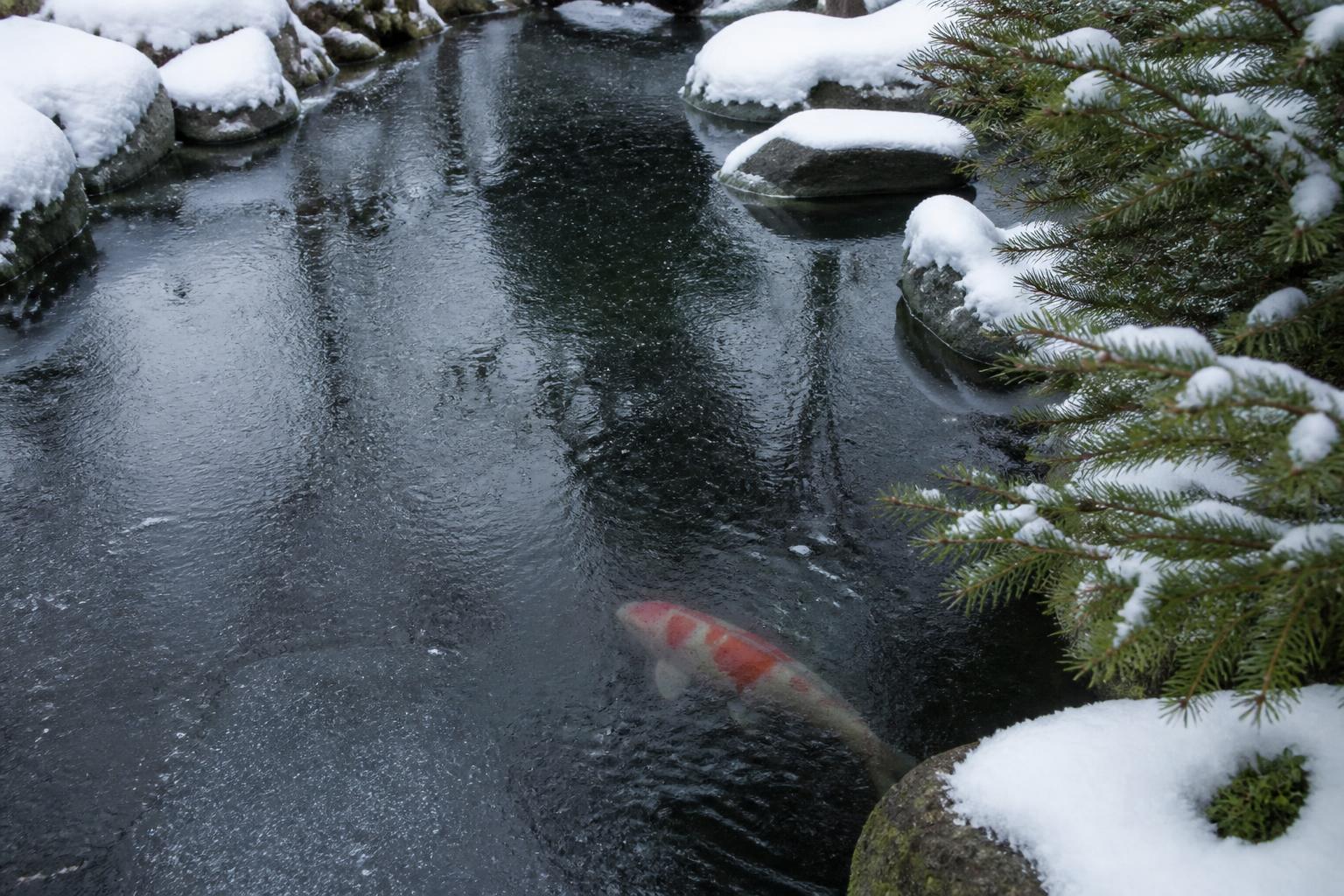
Every fall we get the same question from new Ontario pond owners: "Are my koi going to make it through the winter?" The honest answer is yes — easily — if the pond is set up correctly.
Depth is the foundation. Your pond needs at least 4 feet of depth (5+ is better). Below the frost line, water stays around 4°C all winter — exactly where koi want to be when they're dormant.
Stop feeding around 10°C. Water temperature, not air. Below 10°C, koi digestion slows so much that food just rots in their gut. Switch to wheat germ as temps drop, then stop completely.
Maintain gas exchange. A frozen-over surface traps toxic gases under the ice. The fix is simple: a floating pond de-icer (the heater style) or an air stone placed mid-depth keeps a small hole open all winter.
Turn off the waterfall. Running waterfalls in sub-zero weather supercools your water and tears up your liner with ice. Most installations are designed to shut off the falls and run only the bottom drain and a de-icer through winter.
Don't peek. Avoid breaking ice or removing snow from the pond — both stress dormant koi. They're fine in the dark.
Every koi pond we install in the GTA is built to overwinter koi outdoors with zero drama. If you're not sure your existing pond is ready, send us a few photos in October and we'll tell you exactly what to add.